Showing posts with label Islam. Show all posts

Sunday, November 08, 2009

Maine Comes Out Of The Closet.


When California voters passed Proposition 8, it was a stunning victory for supporters of traditional marriage.

California is a blue state. And although California is home to a strong conservative minority, Proposition 8 even managed to pass in notoriously liberal Los Angeles county. Increased minority turnout -- usually considered a boon for liberals -- pushed the proposition over the top.

To cope with the loss, the gay-rights movement invented a convenient fiction: it was all those darn Mormons! Yes, the insidious Mormon church, with its infinite supply of money, had hoodwinked the good people of California. Because we all know that Mormon coercion is the only possible reason for opposing something as awesome as gay marriage.

In retrospect, there was nothing surprising about the victory. Every time the issue of gay marriage has been brought to a direct vote, Americans across the country have soundly rejected it.

And last Tuesday, Maine joined the ranks of states that have defeated gay marriage at the ballot box.

Earlier this year, members of the Maine State Legislature legalized gay marriage. They probably assumed they were doing what the people wanted. A reasonable assumption, given Maine's demographics.

Like California, Maine is a blue state. Although Maine's senators are Republicans, both are moderate-to-liberal on the issues. And Maine isn't exactly a part of the Bible Belt. A recent Gallup survey on religious identity ranked Maine as the 3rd least religious state in the country, just beneath New Hampshire and Vermont.

Blaming Mormon cash probably won't fly this time. Protect Maine Equality, the campaign supporting Maine's gay marriage law, raised $4 million, compared with only $2.5 raised by Stand for Marriage Maine, which aimed to overturn it.

Social conservatives were outspent and outmaneuvered in unfriendly territory.

So why did this haven of secularism decide to put the gay man down?

Here's my guess: most people are just fine with the current definition of marriage -- even some people who who have no moral qualms about homosexuality. Like Barack Obama, they believe marriage is between a man and a women. And as long as Americans can vote gay marriage down by secret ballot, they will.

Which means that gay-rights activists will have to increasingly rely on courts to impose their will on the people. American voters may not approve of gay marriage, but when courts rule that gay marriage is an inalienable civil right, there's nothing they can do about it.

Sure, some people might be ticked off at first, but conventional wisdom says that history will vindicate their judicial activism.

Or will it?

Advocates of gay marriage assume their cause is the continuation of the civil rights movement of the 1960s. This assumption rests on the premise that marriage is simply the union of two individuals -- making laws banning gay marriages as arbitrary as the laws that prevented mixed-race couples from marrying in the past.

But social conservatives -- along with plenty of social moderates -- believe that marriage was designed to enshrine the unique male-female relationship. No one is being denied the right to get married; it's just that being married involves spending your life with someone of the opposite sex.

Ultimately, the issue isn't about civil rights. It's about the definition of an institution -- and who should be allowed to define it.

This nuance escapes the gay-rights crowd. People who disagree with them are hateful, or homophobic. And they believe that eventually, like the racists of the past, these bigoted neanderthals will quietly fade into the margins of society.

It's true that homosexuality is gaining more public acceptance, and the same thing can be said about gay marriage. But even if the entirety of secular America embraces gay marriage (hardly a foregone conclusion), the religious beliefs held by millions of other Americans will make gay marriage a controversial issue for the foreseeable future. And America's increasing ethnic and religious diversity could play a major role in undermining the gay-rights agenda. Immigrants from third-world countries tend to be more culturally conservative than their native-born counterparts, and the expanding Muslim community in the U.S might prove to be a powerful conservative force in the culture wars.

In other words, resistance is not futile; Americans will not be assimilated. Whenever an advocacy group adopts the language of inevitability, mental flags should go up. This is no exception. Maine's rejection of gay marriage revealed just how tone-deaf gay activists have become. There are deeper issues at work here than a simple conflict between bigotry and acceptance. And if supporters of gay marriage want to continue to ignore and marginalize their opponents, they should brace themselves for the sting of defeat.

Friday, June 05, 2009

When Worlds Collide.


Barack Obama's much-hyped speech to the Muslim world won't change anything. But it was a pretty good piece of political rhetoric.


Yes, he presented a white-washed version of Islamic history, but what else could he do? He's trying to make friends. And generally, you don't diss the people you want to befriend.


Most refreshingly, Obama resisted the temptation to identify Bush administration policies as the root of America's conflict with the Muslim world, as he's done on past occasions.


And while there were the expected apologies for past American actions in the Middle East (like the overthrow of Mohammed Mossadeq), Obama had equally strong praise for the good ol' USA.


Even so, it's beyond naive to assume that rhetoric will do anything to cure the Middle East's problems.


As Obama acknowledged, the conflict between Islamic nations and the West has been going on for a long time. But Obama's dead wrong when he assumes that all this fighting is the result of a communication problem. Like Bush, Obama assumes that all people essentially share the same set of values. It's a beautiful idea, but it's also completely wrong.


Not everyone is a fan of freedom, peace, equality, and tolerance. Historically, very few nations have celebrated these values the way modern societies do, and many nations still reject them. There are a variety reasons why this happens. Some people value the stability of tradition over the chaos that results from individual expression. Some people believe that the collective will should be exalted above personal choices.


And yes, many Muslims reject democratic values because of their religious beliefs.


Like all religions, Islam is complicated. To say that Islam has always been a religion of violence and intolerance would be inaccurate. But to characterize it as a force for peace and tolerance would be just as lopsided. Historically, most Islamic rulers allowed Christians and Jews to exist in their lands. But non-Islamic citizens were hardly equal. Their testimony was disregarded in court, and they were forced to pay a special tax. At times, they were forced to wear distinctive clothing. The Ottoman Empire populated its army with military slaves known as janisaries, most of whom were kidnapped from Christian families when they were children.


While the extermination of religious minorities was rarely official policy, it did happen.


There are verses in the Koran that imply that Christians and Jews will get to paradise, but there are also verses that seem to command Muslims to conquer unbelievers. Even if many modern Muslims would rather live and let live, you don't have to be a history professor to figure out that Muslims in the past felt differently about the matter. And there are still plenty of Muslims who follow the path of violent jihad.


Islamic jurists from different sects have conflicting opinions regarding Islam's compatibility with modern values. Needless to say, some come down firmly against them. While it's true that several Islamic countries have had female leaders, the broader state of women's rights -- and human rights in general -- in the Muslim world is still dismal. Assuming that all of this is just a massive coincidence, or the result of Western imperialism, is nonsense.


The arrogance of Western commentators is their constant claim that "true Islam" is peaceful. Some Islamic sects are peaceful, others aren't. What gives someone the authority to decide which ones are "true?"


I don't think that most Muslims are "bad people" by human standards. I don't think most of them want to kill me. I think they have some legitimate grievances against the West.


But radical Islam isn't an insignificant force in the Middle East. And its adherents don't share our values.


One of the great failures of humanistic policy makers has been their failure to understand the reality of god-centered religions. They assume that a common ethical core lies beneath the veneer of religious belief. If someone does bad things, it's simply because they're poor and oppressed. This is the flawed worldview that Obama espoused when he talked about people "clinging to guns and religion" because of economic hardship.


But in reality, many people do things simply because they believe it's what their god wants them to do -- whether or not it benefits them personally. Their values are not centered around humanistic ethics, or a survival instinct.


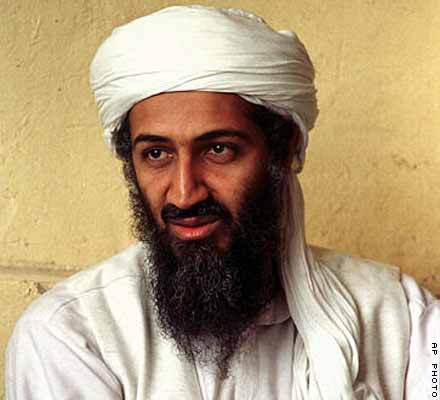
Material poverty can help spark an interest in radicalism, but not all radicals are poor. The Bin Laden family certainly isn't hurting for cash, but that didn't stop lil' Osama from going astray.


What am I getting at?


I'm not sure. In the real world, there's not much the American government can do beyond the things we're already doing: fighting terrorists when possible, allying ourselves with moderates in the region, and attempting to coax skeptical Muslims with reasonable concessions and kind words.


But reality should always inform our decisions. And the reality is that some people are very different from us, and will probably never be like us -- no matter how much we try to be their friends.


This is the world we live in. Coming to terms with it doesn't give us a clear roadmap for the future -- but it doesn't hurt either.

Wednesday, May 06, 2009

Indecent Psychological Exposure?


Every month or so, conservatives find a new what-the-heck-is-wrong-with-England story to shake their heads at.


And now this: Conservative talk-show host Michael Savage has been officially banned from England. According to Jaqui Smith, the director of the British Home Office, his presence in merry olde England would "cause inter-community tension or even violence."

Really?

Savage is a provocative guy. He gets angry -- a lot. And naturally, he has more than his share of detractors. But he isn't in the habit of commanding his listeners to commit acts of violence. Love him or hate him, grouping Savage with neo-Nazis and Islamic terrorists is absurd.

It doesn't take a genius to figure out that this move has more to do with punishing someone for holding unpopular (i.e. unacceptable) views than it does with maintaining public tranquility.

Still, England's seeming censorship of Savage is only the latest sad chapter in the larger story of England's weak stance on the freedom of speech. Due to libel laws that are weighted against defendants, England is being used as an international center for the censorship of controversial material:

While in the United States the plaintiff must prove that the claims against him are false, in English law the defendants' claims are presumed false until proven otherwise: he has to demonstrate his innocence. If his defence fails, he must pay both costs and damages. The plaintiff's lawyers make little attempt to limit their costs: the partners at one well-known firm charge £750 an hour. The bill can rise to millions.

Perhaps you don't live in England or Wales, so you think this has nothing to do with you. You're wrong. English libel law now applies to everyone on Earth. Make any accusation, anywhere in the world, and if the subject can demonstrate that a single person in England or Wales has read it, you could be sued here for every penny, cent, rouble, rupee or renminbi you possess. The internet and the global nature of publishing ensure that these medieval laws have become the most powerful extra-territorial legislation ever drafted.

In other words, if you write something controversial about someone in America, and someone can read it in England, they can come after you. In response to the growth of British "libel tourism," Congress is considering a bill that would prevent the enforcement of foreign libel judgements that violate the 1st amendment. A good move -- but it won't help blacklisted Savage.

If the Obama administration has any guts, it should step up to defend one of our country's most prominent voices. What ever happened to "I may disagree with what you have to say -- but I'll defend to the death your right to say it"?

Tuesday, February 17, 2009

He Has Found The Enemy, And It Is Them.


On Tuesday, former senator Rick Santorum made an appearance at UNL.
His mission?
To warn of the impending danger posed by Islamic extremists.

In a speech that blended history, current events, and theology, Santorum contended that Muslims "who take their religion literally" are threatening Western civilization as we know it. He condemned both Bush and Obama for refusing to acknowledge this.

A key problem in Islam, according to Santorum, is a lack of seperation between church and state. Mohammed was not merely a spiritual figure; he was a leader, and a ruthless conqueror. In contrast, Santorum identified Jesus's command to "render unto Caeser what is Caeser's" as the beginning of a long tradition of secular government in the Christian world.

Santorum believes that Islamic teachings on civil authority are incompatible with the democratic ideals of the West. The consequences of this are seen in Western countries such as the UK and the Netherlands, where critics of Islam are falling victim to what Santorum labeled "creeping Sharia" -- a gradual surrender to Islamic law.

The lesson was timely and informative, but not without flaws.

Santorum's analysis of the differences between Islam and Christianity was shallow. To say that Christiandom has been defined by a seperation of church and state is to ignore a history in which popes frequently held kings in their sway. Likewise, his invectives against Muslims who, unlike Christians, take their scriptures literally seemed strange indeed, considering that millions of Christians view the Bible in the same light.

Practical policy was also hard to come by in Santorum's speech. One of his suggestions for "defeating" radical Islam was to drastically reduce the price of oil, thereby crippling the economic engine of the Middle East. Even assuming that America has the power to magically manipulate oil prices, this seems like a bad policy. While poverty may not be the primary root of Islamic terrorism, it's hard to imagine a scenario in which poverty would make people less prone to religious extremism. Funding from wealthy sheiks may bolster some terrorist organizations, but as long as there are people willing to blow themselves up for a righteous cause, they'll find ways to do so. 

However, the core of Santorum's message -- that differing religious beliefs can produce societies with radically different values -- was a solid one. On college campuses, where the dogma of diversity can silence meaningful discussion about the substantial differences that exist between cultures, we could use a few more Rick Santorums.

Friday, May 25, 2007

Another Long Iraq Article...


In the 2006 elections, the Republicans didn't lose because of corruption within the party, because they spent money like drunken sailors, or because they inflated our national debt to an almost unfathomable extent. They lost because of Iraq. As terrible as the Republican party's apparent desertion of it's fiscal conservative heritage may have been, mismanaged money just doesn't have the same emotional impact on the voting public as thousands of American men and women coming home in boxes. After decades (perhaps centuries) of government corruption, we expect waste, debt and bribery, but no amount of jading can make the citizens of America emotionally dead to death itself, especially if it's for a vague cause that very few actually care about or support.

So it's not exactly surprising that ending, or at least decreasing U.S. involvement in Iraq remains the #1 pillar of the Democratic party's presidential platform. When the vast majority of American citizens oppose a war, leading the fight against that war is generally a sure-fire way to win the support of the vast majority of American citizens.

But what if election day '08 rolls around and the Iraq war is virtually over? And what if the force behind the American pull-out is none other than George W. Bush and his "war-mongering" Republican party?

A GOP U-turn on the issue of Iraq makes a lot of sense from a political standpoint. No matter how many people lean towards the Republican party's positions on social and economic issues, the seemingly never-ending conflict in Iraq is causing millions of voters (especially the so-called "swing voters") to migrate to the anti-war Democrats. If the obstacle of Iraq is removed, and if Republicans play a key role in removing it, they can regain millions of votes, help George W. Bush salvage an almost-positive legacy, and pave the way to a Republican victory in '08 by demolishing the foundation of the Democratic party's new-found popularity. In other words, if the Republicans can beat the Democrats at their own game and end the war, Republicans win.

Is this a little far-fetched? Yes. But not entirely implausible. The first step Republicans need to take in order to bring the war to an end is to find a way to change their position without ever admitting that they were wrong in the first place. Over the past few months, Republicans have been doing just that. How? By slowly shifting blame for the current situation in Iraq from the incompetent U.S. government to the incompetent Iraqi government. The Republicans have ceased preaching unconditional support for the democratic government we helped create, and are now sending a clear message to the Al-Maliki administration: if we don't see any results, you won't see our men dying to prop up a failed system:

(From the Reuters News Service)
The top-ranking Republican in the U.S. Senate on Sunday expressed frustration with the Iraqi government, saying Republicans were "overwhelmingly disappointed" with the lack of political progress.

"The Iraqi government is a huge disappointment," Senate Minority Leader Mitch McConnell told CNN'S Late Edition on Sunday.

"So far, they've not been able do anything they promised on the political side," the Kentucky Republican said, citing the Iraqis' failure to pass a new oil revenue bill, hold local elections and dismantle the former Baath Party of Saddam Hussein. "It's a growing frustration."

"Republicans overwhelmingly feel disappointed about the Iraqi government," he added.

McConnell spoke as the Senate is trying to approve funding for the Iraq war with a compromise that President George W. Bush can sign. Bush has threatened to veto a bill passed by the U.S. House of Representatives that provides only enough money to continue combat for two or three months.

McConnell said there was a growing sense of frustration across all political divides in the U.S. Senate with failures of the Iraqi government.

"I don't know what their problem is but this country has made an enormous investment in giving the Iraqis a chance to have a normal government after all of these years of Saddam Hussein and his atrocities," he said.

Citing media reports, McConnell said some lawmakers in Iraq's parliament wanted a vote to ask the United States to leave.

"I want to assure you, if they vote to ask us to leave, we'll be glad to comply with their request," he said.

This kind of rhetoric sets the stage for a possible scenario in which the Republican party can support a pull-out in Iraq while placing the blame for the collapse of Iraq squarely in the lap of the Iraqi government. The Iraq war will be seen as a just cause undermined by forces beyond our control, allowing Republicans to emerge relatively unscathed from the wreckage of a failed policy.

In another indication of a shift in the Republican party's Iraq policy, the last line in the article hints at another path that could allow the Republicans to support a troop withdrawal without looking like they're supporting a "cut-and-run" strategy. Although there are still some hard-liners like John McCain who want to stay in Iraq even if the Iraqis ask us to leave, several prominent Republicans, including the president, are now pledging to get our soldiers out of Iraq as soon as we're no longer wanted. For quite some time, polls have suggested that the majority of Iraqis want us out of their country, and if these dissatisfied citizens pressure their representatives to support legislation requesting an end to the American presence in Iraq, the Iraq issue could be settled far sooner than anyone imagined.

And in the midst of Republican promises to pull out at the request of the Iraqi people, Muqtada Al-Sadr, the powerful Shiite cleric at the helm of the massive Mahdi army and de facto ruler of Sadr city has emerged from hiding to resume preaching against the "American occupation". Marketing himself as a nationalist who wishes to unify the country, protect the Sunni and Christian minorities, and provide Iraq's ailing slums with a functioning public service infrastructure, his words have already found a receptive audience in many segments of Iraqi society:


(Taken from Al-Jazeera)
Muqtada al-Sadr, the hardline Shia cleric, has come out of hiding to deliver an anti-American sermon at a local mosque in the city of Kufa, his first since last October.

"No, no for the devil! No, no for America! No, no for the occupation! No, no for Israel!" al-Sadr chanted at the start of his speech.

About 6,000 worshippers in the mosque were present to hear the speech.

In recent months, al-Sadr's group have been trying to shake off its image as a Shia sectarian movement and portray the cleric as a unifier and Iraqi nationalist by reaching across the divide to Sunnis and other factions.

Al-Sadr said: "I say to our Sunni brothers in Iraq that we are brothers and the occupier shall not divide us. They are welcome and we are ready to co-operate with them in all fields. This is my hand I stretch out to them."

Al-Sadr's call came a few days after Shia leaders from his east Baghdad stronghold met with Sunni tribal heads from western Iraq.

Both sides promised to work together for national reconciliation and against extremism.

Al-Sadr's supporters in the Iraqi national assembly have also gathered support from Sunni and Christian deputies for a motion that would compel Nuri al-Maliki, Iraqi's prime minister, to set a timetable for US troop withdrawal.

Al-Sadr also promised to protect Iraq's Sunni and Christian minorities from hardline Sunni factions, or Nawasib, such as al-Qaeda, if US forces would allow his fighters to deploy.

He said: "I received complaints from brother Sunnis and some Christians about the aggressions of the Nawasib. I am ready to defend them and will be a shield for them, although the occupier would not accept that."

"I say that our houses and cities are open for them and that for Iraqis to kill Sunnis and Christians is a sin. What the Nawasib are doing to compel the Christians to embrace Islam is despicable."

Al-Sadr also had tough words for al-Maliki's goverment over its failure to provide public services in Iraqi cities, four years after Saddam's fall.

He said: "There is an abundance of cries and complaints calling for democracy in Iraq. Despite these calls, the Iraqi people remain deprived of services like water and electricity and even communications.

"If the government won't help, we will have another word with it."

Along with his verbal assaults on American involvement in Iraq and the incompetence of the Iraqi government, Al-Sadr is putting his money where his mouth is and building an alternative network of social services in Iraq, providing education and humanitarian aid to Shiite Iraqis who would otherwise go without. If Iraqi's begin to perceive that Al-Sadr and his ilk can protect and provide for Iraqi citizens better than the Americans, we could quickly become irrelevant as a force for stabilization (at least among the Shiite majority), removing one of the key reasons for our continued presence in Iraq. Al-Sadr is already an extremely influential figure in the Shiite community, and if he can succeed in bringing together all of the Iraqi's who have become disillusioned with the status quo (this may be unlikely, due to Al-Sadr's connection to much of the anti-Sunni violence in Iraq), the likelihood of U.S. forces voluntarily withdrawing at the request of the Iraqi people could significantly increase.

And to add yet another indication of a possible Republican about-face in Iraq, it appears that there are now internal forces in the White-House pushing for troop reduction:

(From the New York Times)
The Bush administration is developing what are described as concepts for reducing American combat forces in Iraq by as much as half next year, according to senior administration officials in the midst of the internal debate.


It is the first indication that growing political pressure is forcing the White House to turn its attention to what happens after the current troop increase runs its course.

The concepts call for a reduction in forces that could lower troop levels by the midst of the 2008 presidential election to roughly 100,000, from about 146,000, the latest available figure, which the military reported on May 1. They would also greatly scale back the mission that President Bush set for the American military when he ordered it in January to win back control of Baghdad and Anbar Province.

The mission would instead focus on the training of Iraqi troops and fighting Al Qaeda in Mesopotamia, while removing Americans from many of the counterinsurgency efforts inside Baghdad.

Essentially, after years of "staying the course", it appears that the Republican party and the president are beginning to realize that change in Iraq is priority numero uno for American voters. The only question is the level of change they're willing to enact, and whether they can enact such change without making themselves look like Kerry-esque flip-floppers. If the Republican's new focus on complying with the will of the Iraqi people is anything more than empty rhetoric, there's a chance that we could be seeing the groundwork for massive changes in Iraq being laid by the current administration. As ironic as it may seem, if Bush and the rest of the Republican party do exactly what the Democrats say they want them to do, it could end up destroying the Democratic party in the upcoming elections by stealing their strongest selling point.


Of course, I have major doubts that we'll actually be seeing the Republican party doing a 180 on the issue of Iraq any time soon, but it's certainly an intriguing possibility. We'll just have to wait and see what General Petraeus has to say when he testifies about the progress of the surge at the end of the Summer. If the news is good, "stay the course" may continue to be (and should be) the administration's policy of choice. But if the news isn't so good, and if Iraqi opinion towards our presence sours even more, we could find ourselves on our way out the door in Iraq by 2008.

Thursday, May 17, 2007

Endless terror.


When the topic of the Iraq war comes up, John McCain keeps repeating a certain phrase to summarize what he believes the consequences of a premature US withdrawal will be:

"They (Al-Qaeda) will follow us home."

In other words, McCain believes that our troops in Iraq are holding back the tide of Islamic terrorism, and if we pull out, the fanatics will be free to invade our country and wreck havoc on the good citizens of the United States. John McCain is an intelligent, experienced policy maker and an American hero, but I have to say that this is a ludicrous statement. I don't call it ludicrous because I believe Al-Qaeda doesn't want to attack the United States, which would be equally ludicrous, but because it represents an antiquated view of war which simply doesn't apply in any way to our clash with Al-Qaeda in Iraq.

The uncomfortable truth of the matter is that all Al-Qaeda needs to commit an act of terrorism on our soil is just one fanatical suicidal/homicidal maniac willing to blow himself up in a public place. Our military presence in Iraq in no way precludes an attack at home. It all comes down to the very nature of our enemy. If Al-Qaeda were a traditional standing army, with the goal of taking and occupying American territory, people like McCain would be absolutely right; fighting them on their own turf would almost certainly stop them from invading our country. After all, what sane military strategist would consider launching a major offensive on an enemy country if the forces of that country were overrunning their defenses at home?

But Al-Qaeda isn't a traditional standing army. It's a loosely knit, de-centralized group of terrorist cells scattered all around the world. They don't need some kind of central command center in Iraq to launch an attack on America. Al-Qaeda didn't even have a significant presence in Iraq until we came there. At the moment, Al-Qaeda is sending terrorists to Iraq because they want to kill Americans in Iraq. If Al-Qaeda wanted to kill Americans in New York, Boston, or Omaha, they could send terrorists to New York, Boston, or Omaha. They're not an army, they're not concerned with holding territory, and they're not going to get "stretched-out" or "over-deployed" if they send a handful of guys to blow themselves up within our borders. Al-Qaeda attacks don't require massive regimented formations of soldiers, they just require a couple of Islamic nutcases with cell-phones, fake IDs and homemade bombs. Quite frankly, I don't think our current strategy of "keeping on the offense" against terrorism, to quote Rudy Guiliani, really does a whole lot to protect us from terrorism. Are we killing terrorists in Iraq? Yes. Are groups like Al-Qaeda able to replace members as fast as we kill them? Yes. Can they attack us, whether or not we "stay the course" or "cut and run" in Iraq? Yes.

The problem is that politicians from both parties seem to be in an old-war mindset. They view Al-Qaeda as a new Nazi Germany that we can defeat on the battlefield using overwhelming force. If only it were as simple as that. In reality, Al-Qaeda and other Islamic terrorist organizations are completely different from the enemies our nation is used to dealing with. There aren't many clear options for America to take in the battle to counter radical Islamic terrorism, and without an honest inquiry into the issue, none will be discovered. Personally, I think a good start would be to ask "How can we diminish the appeal of radical Islam around the world?" rather than "How can we destroy a specific organization?". There will always be radical Islamic organizations, just as there will always be Nazi organizations, but there may be steps that the West can take to make sure that radical Islam becomes a rejected fringe of society in the Middle East rather than a popular movement. We can kill as many terrorists as we want, but as long as a steady stream of young radicals remains ready to take their place, the "War on Terror" is just treading in water.

In the last presidential election, George W. Bush came pretty close to the mark when he said the following about the "War on Terror":

"I don't think you can win it. But I think you can create conditions so that those who use terror as a tool are less acceptable in parts of the world. Let's put it that way."

Eventually, after enduring intense media scrutiny, he retracted the statement. Too bad. Despite how unpopular that kind of statement may be, it represents something far closer to the truth than the official party rhetoric. The heart of Islamic terrorism is a set of ideas, and no matter how hard you try, you can't destroy ideas. You can destroy governments, dictators, and armies. You can only marginalize, counter, and reduce the attractiveness of ideas. In the future, can we hope to better protect our country against terrorism and reduce the influence of radical Islam? Perhaps. But we can never make our country completely safe, or completely eradicate radical Islam. As in the "War on Drugs", there can be no victory in the "War on Terror". Heads of State can sign a proclamation of unconditional surrender. Terrorism can't.

Thursday, December 14, 2006

Another set of unrelated topics.

1. The Taco Bell tolls for thee...

The Taco Bell E. Coli outbreak continues to rage on, and this time, the feds believe a different veggie is to blame. Apparently, the E. Coli which has now infected 71 people across the country, is being carried by lettuce, which, if I recall correctly, is found on just about everything served at Taco Bell.

And just to make things interesting, Taco Bell's lesser known rival, Taco John's, has an E. Coli outbreak of it's own. At this point, I think it's advisable to avoid Americanized Mexican fast food altogether. Stick to good, wholesome, old fashioned, patriotic food like McDonald's. There's absolutely no health risk there, right? As the brilliant marketers over at the golden arches put it: I'm lovin' it! (TM).

2. Government enforces law. Uproar ensues.

Why is the fact that federal agents arrested 1200+ illegal immigrants in a series of massive meat-packing plant raids causing such a hubub? Our law enforcement agents have one job: to enforce the law. Illegal immigration is (as the name implies) against the law. People that are upset by the raid have only one rational course of action: to attempt to repeal our countries immigration laws. Complaining that our law enforcers are enforcing our laws is ridiculous. The following is an excerpt from the linked article that you didn't (and in all likelihood, won't) read:

Immigration officials last month informed Swift (the company that hired the illegal workers) that it would remove unauthorized workers on Dec. 4, but Swift asked a federal judge to prevent agents from conducting the raid, arguing it would cause "substantial and irreparable injury" to its business.

What a stupid company. It hires a bunch of illegals (although they claim that they had no knowledge of illegal workers in the company), is found out and warned of the upcoming raid, and then tries to convince the government not to arrest a bunch of criminals because it would hurt it's business. That's not how it works. When someone breaks a federal law, they get punished. It doesn't matter who they are, or who they work for. Justice is supposed to be blind.

Again, although it's very understandable that some might feel empathy for the illegals in our country who are just trying to make a better life for their families, any quarrel people have with these raids should rest with the laws themselves, not the enforcement.

3. Excellent Comments on Iraq

Here's a very insightful quote concerning one of the major mistakes the US made in our "war on terror" in Iraq:

"Imagine one day waking up and finding out that your nation's leaders had completely dismantled all police and military. As a result, there is not one policeman, or state, or federal law enforcement agent, or even one national guard or any soldier to protect you from criminal elements, or terrorists. It will be total chaos.


"Then imagine that instead of calling back the army and security forces, the authorities in this imaginary scenario decided to form a new army and police from racist militias, some mercenaries and organised crime gangs.


"With the new government-issued budget and government-issued vehicles, these armed groups begin arresting, torturing, murdering innocent people either because of their faith, or creed, or purely for profit.


"This is exactly what has happened in Iraq."


That quote comes from none other than the vice president of Iraq, Tareq Al-Hashemi. And he's right on. The United States was quite naive to think that a peaceful country would emerge gently out of the state of anarchy it created. The fact is that Iraq is made up of several groups of people who want to kill each other. For years, Saddam Hussein's dictatorship, for all it's faults, did one thing well: it stabilized the country. The various radical factions co-existing in Iraq needed, as Hobbes (the philosopher, not the tiger) would say, "a common power to keep them all in awe" . Saddam delivered this in spades. When America dismantled the Iraqi Government and all it's institutions, they created a vacuum of power that the opposing religious and ethnic groups are still violently attempting to fill. The US-supported Iraqi military and police force is helpless in the face of the escalating violence because most of the people perpetrating the violence are in their ranks. Whole regions are under the control of radical militias. The leader of the most powerful Shiite death squads and militias, Muqtada Al-Sadr is a powerful member of Iraq's democratic government. Essentially, everything that could have gone wrong is going wrong. With conservative estimates of Iraqi deaths currently standing at over 55,000, and high estimates going over 100,000, the death toll in this period of anarchy is already exceeding that of Saddam's reign.

Of course, "cut and run" still isn't an option. America seriously screwed up Iraq, and if we pull out before the job of stabilizing the country is done, the Iraqis will suffer even more. It just makes you wish we had leaders that could think twice before doing something so stupid. The worst part of it all is that even if the country is successfully stabilized, it'll just be another islamic nation, which is something we could certainly do without. In the long run, I don't think that Iraq's Islamic democracy will be any improvement over Saddam's secular government. I guess only time will tell.


Sunday, October 22, 2006

3 topics: 60% more flavor, 25% less fat.

1. Omaha and smoking in public aren't friends anymore.

One word: kudos. Not just ordinary kudos. The peanut butter kind. People can whine all they want about personal freedom, but quite frankly, emitting toxic fumes in public places isn't something that anyone should have a right to do. In the simplest of terms, smoking in public is recklessly endangering the health of others. If you want to screw up your lungs, do it in the privacy of your own home. Sure, calling 9-1-1 to report public smoking is a tad extreme, but I think the intentions are good. All who wish to point out that Marx also had good intentions, please put a sock in it. Marx was a bitter drunkard with perhaps the worst sense of personal hygiene ever seen in a European intellectual. How can a man like that have good intentions? Marx was evil. Criminalizing smoking in public is good.

2. Iraq violence escalating during the "holy month" of Ramadan.

The religion of peace strikes again. This might even make some sense to my western-ized mind if they were only targeting American soldiers. Apparently some Muslims think that murdering other Muslims is a perfectly acceptable way to celebrate an Islamic holy month. Haven't they heard of carols? Cookies? Tacky decorations? Gifts? Santa? I guess Americans still have a few things to teach Iraq when it comes to commercializing holidays. On a more serious note, I think the current situation in Iraq illustrates the ignorance behind our attempts to create a democratic middle east. Democracy isn't something that you can force on just any group of people. We treat democracy like it's some kind of magic medicine that will instantly turn the most harsh regions of the world into happy American towns with churches, shopping malls, and neatly manicured lawns. This simply isn't the case. If you give democracy to a country where the people still have a 5th century mindset, you end up with a bloody mess. In democratic Afghanistan, Christians are deported and drug-peddling warlords reign. In democratic Iraq, the Sunni's are mad that Shiites dominate the government, so they deal with it in the only way they know how: with terrorist attacks against civilians and government officials. The Shiites respond in kind with brutal revenge killings. "Palestine" holds elections and, to the astonishment of the west, the radical, violent Hamas party comes into power. Democracy does not equal peace. Civilized western-style democracy with all of it's trimmings (freedom of speech, press, religion, etc.) can only be achieved if the people of the country have a civilized western-style mind-set. You can't expect people to become good little citizens of the international community just because they have a new form of government.

3. Barack Obama now says he's considering running in '08

Again, Obama continues to hint at a possible '08 presidential bid. I don't really have anything else to say. Except that Barack Obama's middle name is Hussein. Seriously. This is probably his single greatest political liability.

Saturday, February 18, 2006

Eleven more people were killed today in the middle east. Over cartoons published in a danish magazine about five months ago . And of course, the people killed had absolutely nothing to do with the cartoons anyways.

Haven't these people heard of writing a letter to the editor? Instead of torching the consulates of random western countries, thier retribution could be more like this:

"Dear Editor of Jyllands-Posten, I was greatly offended by the cartoons you published in your last issue depicting the prophet Muhammed in a demeaning manner. I think that there is a great misunderstanding about our faith. Perhaps you can come over some time, and we can discuss our feelings on this matter. I will bake delicious cookies*. "

-Rashid Al Abu, Iran


Then again... there is a certain apeal to making a total idiot of yourself in front of millions of people.


*Do people actually bake cookies in the Middle East?